
Join us for a dynamic three-day symposium (June 22-24, 2026), starting at 9:00 AM each day, featuring four exciting tracks:
The program includes keynote lectures by invited speakers, presentations based on accepted abstracts, and hands-on workshops, with special sessions welcoming students and early-career researchers. It’s a great opportunity to learn, network, and get inspired by cutting-edge research.
More to be Announced
Invited Speakers
Below, you’ll find the list of our invited speakers, who will be sharing their expertise and insights throughout the symposium:
-
When Sound Becomes Medicine: Biomedical Ultrasound as the Interdisciplinary Science
The purpose of this talk is to introduce the breadth of multidisciplinary development that enabled marvelous advances in the field of biomedical ultrasound. Over the past century this field has evolved into one of the most profoundly interdisciplinary domains in modern science and medicine. That was achieved by a close collaboration between the scholars working on the intersection of biology, chemistry, physics, engineering, and clinical practice. The talk will attempt to demonstrate how interdisciplinary background of ultrasound researchers led to the unprecedented rise of ultrasound from a primarily diagnostic modality into a versatile platform for precision imaging, targeted therapy, and neuromodulation. Selected examples will highlight the transformation of diagnostic ultrasound into a plethora of therapeutic treatments. High-frequency (15 MHz+) ultrasound, elastography, and contrast-enhanced techniques now enable real-time visualization of tissue architecture, perfusion, and mechanobiological changes with exceptional submillimeter resolution. In parallel, therapeutic ultrasound has entered a new era defined by noninvasive, cell-specific interventions. Low-intensity (<1W/cm2) focused ultrasound (LIFU) and ultrasound-mediated drug delivery are emerging as transformative tools in neuroengineering and the treatment of the neuropsychiatric disorders. By modulating neural activity without surgery, ultrasound offers promising avenues for managing Parkinson’s disease, Alzheimer’s pathology, chronic pain, and addiction. Presentation of the comprehensive chart of applications will deliver the audience coherent and lucid view of the opportunities to work with the ultrasound technology in academic, industrial and clinical environment.
-
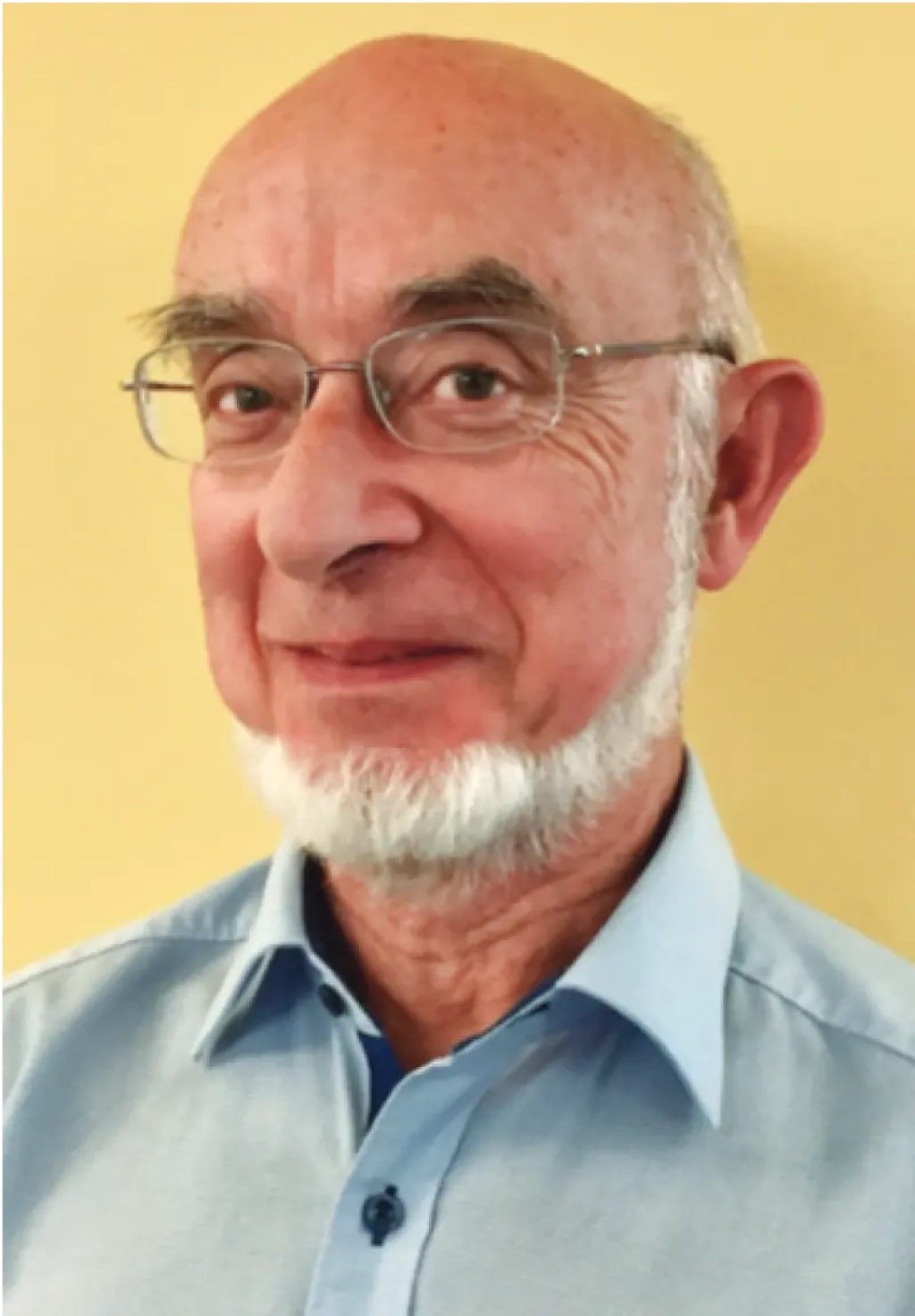
Dr. Peter A. Lewin
Biomedical Ultrasound Research and Education Center, Drexel University
Keynote Speaker(Richard B. Beard Distinguished University Professor, Electrical and Computer Engineering and Biomedical Engineering, Director, Biomedical Ultrasound Research and Education Center, Drexel University)
-
High-Frame-Rate Ultrasound Imaging in the Deep Learning Era
Ultrasound is undoubtedly a popular medical imaging modality and is becoming known for its high-frame-rate imaging capabilities. However, high-frame-rate ultrasound has yet to flourish in point-of-care applications due to the lack of suitable portable hardware, and its ability to offer time-resolved flow visualization is hampered by Doppler aliasing artifacts. Can we take advantage of deep learning to overcome bottlenecks in high-frame-rate system design? Can we design neural networks to resolve Doppler aliasing artifacts in real time? This seminar will introduce our laboratory’s quest to learn deep and learn smart about ultrasound imaging systems to make high-frame-rate ultrasound viable for portable use and flow estimation. We will demonstrate how deep learning solutions can be devised to resolve data transfer bottlenecks in ultrasound systems and, in turn, enable robust generation of high-frame-rate ultrasound images with data acquired from few array channels. We will also show how deep learning has enabled the design of advanced Doppler flow imaging platforms with lucid flow visualization performance. Related algorithms, real-time engineering efforts, and clinical applications will be presented throughout the presentation.
-
Open-source ultrasound wearable platforms
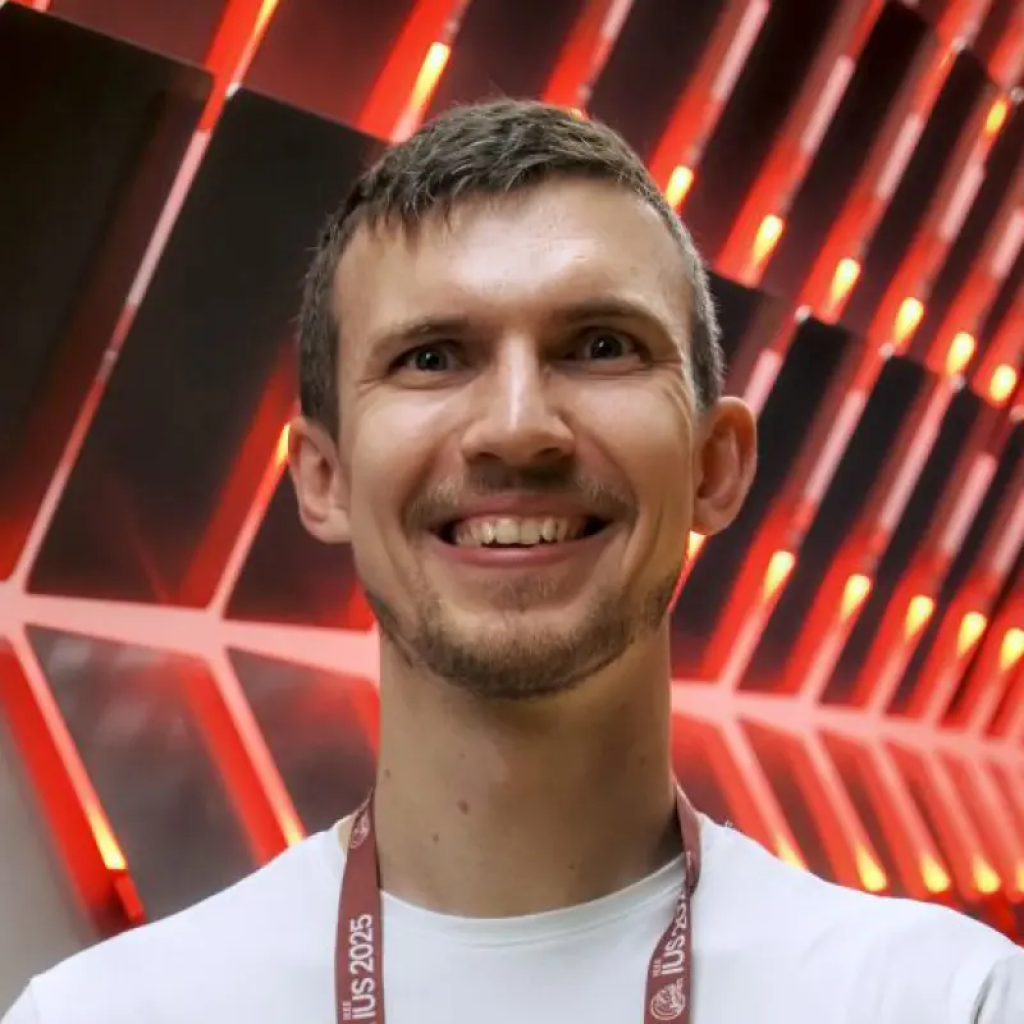
Sergei Vostrikov is an R&D engineer and researcher specializing in wearable ultrasound systems and embedded sensing technologies. He received his B.Sc. in Physics from Novosibirsk State University (2017) and his M.Sc. in Information Systems and Technologies from Skolkovo Institute of Science and Technology (2019). He completed his Ph.D. at ETH Zürich in 2024 within the Integrated Systems Laboratory under Prof. Luca Benini, focusing on low-power architectures for wearable ultrasound.
His work bridges low-power hardware development, embedded firmware, and physics-informed signal processing to advance sensing technologies. He led the development of state-of-the-art ultrasound platforms, including TinyProbe and WULPUS, the first open-source wearable ultrasound probe, enabling energy-efficient, wireless sensing for emerging healthcare and human–machine interface applications.
Currently at Rheonics, Sergei develops electronics and signal processing systems for precision inline viscometers and density meters, enabling reliable, low-noise rheological measurements in real-world environments.
-
Wearable ultrasound technology
-
Prof. Sheng Xu
Department of Anesthesiology, Perioperative and Pain Medicine at Stanford University
-
Tracks
Wearables
Submission deadline: March 15
Scientific Presentation/Poster Sessions
Abstracts required
Contributions will be assigned to either oral presentation or poster session
BYD – Bring your Device (Live Demo Competition)
Present your working prototype and experience how other systems perform beyond controlled laboratory environments.
Short abstract required (will not be published)
“Problems without Solutions” and “Solutions without Problems”
Pitch Session – a dynamic forum to connect unmet needs with innovative ideas.
Short abstract required (will not be published)
Features Invited Keynote Contributions
Lab Secrets Session
Experts share recent technical challenges, lessons learned, and practical solutions that often remain unpublished.
Hands-On Workshops
Small-group, practice-oriented sessions designed to deepen technical skills and application knowledge.